

How to negotiate freight rates: 13 tips for carriers

What are you waiting for?
Make more money starting now.
Freight rate negotiation is one of the most important skills a carrier or owner-operator has. Every load is a business decision. Getting paid fairly for the work you do is how you stay on the road, cover your costs, and build something worth having.
Brokers negotiate every day. Many brokers will test how firm you are. These 13 tips give you the data, tools, and confidence to get better rates on every load you haul.
Tip 1: Pay attention to spot rates
A spot rate is a one-time rate for moving a single load. Spot rates shift constantly based on fuel prices, season, lane demand, and truck supply. Before you contact a broker, know what the market is paying for the lane.
Spot Market Insights gives you weekly rate data, rate trends, and truck supply and demand across regions. If the broker’s opening offer falls below the market average, you have numbers to support a counter. Going in with data is a different conversation than going in blind.
See if the offered rate falls within the spot market average. If not, use what you know to push for more.
Tip 2: Understand the loads-to-trucks ratio
Before you quote a rate, check how many trucks are posted on the lane. Lots of loads and few trucks? You have room to ask for more. Lots of trucks and not enough loads? Rates run lower, and the window for freight negotiation tightens.
The Truckstop Load Board shows the loads-to-trucks ratio directly in your search results, giving you a quick snapshot of supply and demand on that lane. You can see how many trucks are competing for freight at both the origin and destination, helping you gauge how much negotiating power you have before you call on the load.
You can also use the Market Conditions Map to visualize hot and cold freight zones across the country, so you know where capacity is tight and where competition is heavier.
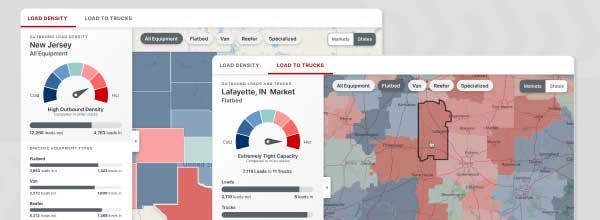
Knowing where the balance sits keeps your expectations grounded and your counters realistic.
Tip 3: Know your cost per mile
If you don’t know what it costs to run your truck, you have no floor in any negotiation. Brokers push for lower rates every time. Without this number, you’re guessing. With it, you’re negotiating freight rates from solid ground.
Knowing your cost per mile means adding up all expenses and dividing by total miles. Include your truck payment, insurance, fuel, maintenance, food, lodging, and your own pay. No exceptions. This number is your starting point for every rate conversation.
Tip 4: Ask about fees before agreeing to a rate
Before you commit to a load, get the full cost picture. Ask about lumper fees, dock fees, tolls along the route, and whether the fuel surcharge is included in the rate. Ask whether the load requires any special permits.
Also think about accessorial charges specific to your haul. Oversized loads, residential deliveries, and advance notice requirements add work and cost. Truck freight rate negotiation goes sideways when fees appear after the fact. Get the full picture before you agree.
Tip 5: Factor in drop location and deadhead miles
Some lanes pay well in one direction and poorly in the other. Getting into Florida is a common example. Freight into the state moves at decent rates. Coming out is a different story. If you know a drop location makes your backhaul harder to find, price the inbound leg higher to compensate.
Deadhead miles are miles you drive without a loaded trailer. You spend fuel and time and get nothing back for it. Look at what freight is available at the drop point before you agree to the outbound rate.
Check Truckstop.com’s Backhaul Search or ask the broker whether they have return freight. If they don’t, build the likely empty miles into your quote before the conversation ends.
Discovering the backhaul problem after you’ve accepted the load is how carriers absorb costs they never planned for.
Tip 6: Negotiate your fuel surcharge
A fuel surcharge is a fee you add on top of your freight rate to cover diesel costs when prices move against you. You set it. You calculate it. It gets billed to the shipper.
Diesel has climbed sharply in early 2026. The conflict in the Middle East pushed the average national price past $4.78 a gallon, a rise of more than a dollar since late February. For carriers running thousands of miles a week, that difference hits hard.
Most carriers calculate a fuel surcharge by taking the difference between their base fuel price and the current price at the pump, dividing that by their miles per gallon, then multiplying by the miles traveled. The result is a per-load surcharge that keeps your actual costs covered when the market moves fast.
If you don’t have a fuel surcharge built into your rate structure, now is the time to add one. When diesel is stable, it may not come up often. When it spikes like this, it’s the difference between a profitable load and one that costs you money to haul.
Tip 7: Know your permitting and routing before quoting
This tip matters most for carriers hauling oversize or overweight freight. But it applies to anyone who has accepted a load without fully pricing the total trip.
Permits cost money. Escorts cost more. Routing restrictions add miles. On a standard dry van load, a missed fee hurts. On a heavy haul load, underpricing one trip wipes out weeks of work.
Before quoting a rate on oversize freight, know the total trip cost. That means more than fuel and drive time. Permit requirements vary by state, weight, and dimensions. Escort requirements stack up fast. Heavy haul trucking is not standard freight, and pricing it like standard freight is how margins disappear.
The Truckstop Heavy Haul Load Board is built for this. It includes integrated rate quotes and permit quotes with escort requirements built in, so you see the real cost of the trip before you commit. For oversize operators, knowing those numbers before booking is the difference between a profitable load and a loss.
Tip 8: Use AI to sharpen your negotiation
Brokers on the other side of carrier negotiations are already using AI tools in their freight broker workflows to price loads, spot lane trends, and respond faster. Knowing this helps you understand what you’re walking into.
AI-assisted features in load boards help you compare rates, identify better-paying loads on your preferred lanes, and see market shifts before a broker quotes you. Going into a negotiating freight rates conversation with real-time market data behind you is a different experience than guessing based on what you hauled last month.
The information gap between carriers and brokers has always been one of the oldest advantages brokers hold. Closing it is how you start negotiating from strength.
Tip 9: Know your cash flow before you say yes
A rate is a number on paper. When you get paid is the actual deal.
A good rate with 60-day payment terms is worth less than a fair rate paid in two days. Cash is what keeps fuel in the tank. Payment terms are part of freight rate negotiation, not a separate conversation. Ask about them before you accept the load.
If a broker is offering 45-day payment on a load you want, price the wait into the rate you accept. Slow payment shifts real cost onto you. Carriers running tight margins who wait six weeks to get paid are financing the broker’s operation.
When freight rates drop, cash flow pressure gets worse. Factoring turns slow-paying receivables into same-day cash. If payment terms are not negotiable, factoring keeps your business moving regardless of the broker’s schedule.
Review your full financial picture regularly using the trucking company profit and loss playbook. Know your numbers before you pick up the phone.
Fast payment often matters more than the rate itself when margins are tight.
Tip 10: Know how to negotiate in a soft market
The freight market in 2026 has more trucks than loads in many lanes. Brokers know it. They’ll open low and wait to see if you’ll take it.
Negotiating freight rates in a down market requires a different approach than working from a position of scarcity. The instinct is to hold firm and say no. Sometimes that works. But the more durable strategy is knowing which loads to fight for and which to take.
Start by protecting your cost per mile. In a soft market, the floor matters more than the ceiling. A rate that covers your costs and keeps wheels turning is better than holding out for a number that never comes.
Look for loads where the broker has limited options. Specialized equipment, tight delivery windows, and lanes with low truck density are where your negotiating position is strongest even when the broader market is soft. Use the loads-to-trucks data for the specific lane, not the market in general.
If the rate won’t move, push on terms. Faster payment, fuel surcharge adjustments, and accessorial coverage are all part of freight negotiation, and brokers have more flexibility there than on the headline rate.
Tip 11: Build dedicated lane relationships with brokers
Spot freight keeps your options open. It also keeps you on the phone negotiating rates every single load.
Carriers who build dedicated lane relationships with specific brokers trade some rate flexibility for consistency. A broker who knows your truck is reliable on a particular lane will offer you that load before it hits the board. That’s fewer deadhead miles, fewer rate conversations, and a more predictable week.
Start with one or two brokers who move freight in your preferred lanes consistently. Tell them what you run and when you’re available. Ask what it would take to be their first call on that lane. Most brokers will tell you directly.
Tip 12: Be confident enough to say no

You’re a professional with a history of hauling freight. Brokers know that. When a broker’s rate doesn’t work, walking away is a legitimate move.
Saying no sometimes leads to a better counter. It also filters out brokers looking for someone to take a below-market load. Building a reputation for firm but fair carrier negotiations means brokers call you first when a good load comes through, often before it hits the board.
Tip 13: Build the relationship beyond the rate
Freight rate negotiation doesn’t end when you accept a load. How you perform shapes what the broker offers you next time.
Deliver on time. Communicate proactively. Handle problems without drama. Brokers keep a running score on every carrier they work with. The reliable ones get called first when a good load comes available.
Consistent performance earns rate flexibility over time, and that adds up faster than winning any single negotiation.
Better data leads to better rates
Every tip in this list comes down to one thing: knowing your numbers before the conversation starts:
- Your cost per mile
- The loads-to-trucks ratio on your lane
- The spot rate
- The full trip cost including deadhead, fees, and fuel
Carriers who walk into freight rate negotiation with that information get better outcomes than those who don’t.
Truckstop.com puts that information in one place. Rate data, broker ratings, load comparison tools, market intelligence, and the largest verified load board in the industry. Whether you’re an independent owner-operator booking your next load or a fleet manager planning lanes for the week, the tools are there to help you negotiate from strength.
The freight market in 2026 is not easy. Rates are soft in many lanes, diesel is climbing, and brokers have options. The carriers who hold their own are the ones who show up prepared.




Get helpful content delivered to your inbox.
Sign up today.
Find high-quality loads fast, get higher rates on every haul, and access tools that make your job easier at every turn.






.png)

.png)

