

Why people and process come before technology in your fleet (with Nate Johnson)
Tune in to
Behind the Freight
Real-world knowledge that keeps you in the driver's seat and making money.
A fleet buys a new system to fix its dispatch mess. Six months and a few thousand dollars later, the same problems are still there. The software runs fine. The process feeding it never got cleaned up.
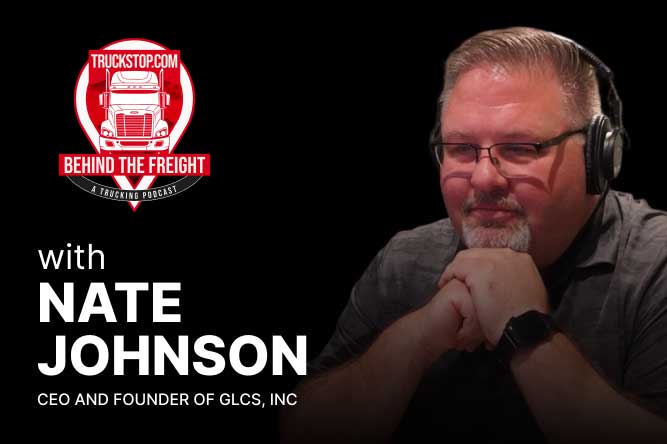
In a recent episode of Behind the Freight, Todd Waldron and John Howland sat down with Nate Johnson, who has spent thirty years in trucking and worked with more than 2,000 companies on this exact problem. His take: technology is usually the last thing a fleet should worry about.
His whole approach starts with the people and the process, not the tool. On the episode he walks through why, and what to do instead.
Access the full conversation on Behind the Freight:
- Apple Podcasts: Listen on Apple Podcasts
- YouTube: Watch on YouTube
- Spotify: Listen on Spotify
How GLCS got started
Nate got his start in transportation as a driver. After 15 years managing fleets, he ran his own fleet until he and his team sold in 2006.
He founded GLCS about ten years ago with a single customer and one belief: take care of people, and good things follow. He still runs the company on that idea.
The belief is why he treats people as the starting point for any tech decision. Software, he says, only reflects the people and processes already in place, so the work has to start there, not with a product.
Put people and process ahead of technology
Nate looks at any trucking business through a three-part order: people, process, and technology. People sit at the top. Process comes next. Technology sits at the bottom.
The reasoning is simple. Great people can run a solid operation on mediocre tools. Bad people will sink the best software you can buy.
“Great people, okay process, and crappy technology, you still have a good business.”
Owners often buy tools to make the work easier or the staff happier. Skip the human side, though, and the money goes out the door without a plan behind it. A team that knows how to work together, following one clear way of doing things, does more for a rollout than any feature list.
What changed since 2006
One of Nate’s more surprising points is that many fleets were more automated twenty years ago than they are now. Back in 2006, the industry had less noise and fewer compliance mandates pulling at everyone’s time.
Since then, waves of rules like ELDs have forced carriers to spend real money and hours just staying legal. That work pulled attention away from the basic work of knowing what it actually costs to run a truck.
“Most fleets today can’t touch what we were doing in 2006.”
More tools exist today, but they often create more work. Shippers want tracking updates every few minutes and rates within seconds. The answer, in Nate’s view, is to slow down and get back in control of costs like fuel, maintenance, and empty miles instead of chasing speed with more software.
Standardize before you automate
Nate uses a plain framework for any operational change: standardize, automate, improve. The first step is writing down exactly how the work gets done today, so every dispatcher and manager follows the same steps.
Skip that, and each person does things a little differently every day. Do that long enough and you end up with dirty data that ruins the numbers you use to run the business.
Once the process is the same every time, automation has something clean to work with. Automating a messy process just gives you a faster mess. Only after the automation is running can the data help you improve margins and grow.
Clean, consistent inputs are also what let you see where the margin actually goes. Most companies skip the first step and go straight to buying a product, which is why so many tech projects fall apart.
What to ask a software vendor
Choosing the right tool is hard when the market is this crowded. By Nate’s count, there are more than 900 TMS products out there, and only 30 or 40 are worth a serious look.
His advice is to stop buying on feel. Do not pick a tool because a competitor uses it or because an ad caught your eye.
“Stop buying emotionally. Understand what you’re purchasing and why.”
He also pushes carriers to ask any software or AI vendor a direct question about security: are you SOC 2 certified? Plenty of newer vendors have not built that foundation yet, and one question can filter out a risky partner before your data is ever at stake.
The driver problem technology can’t fix
The industry’s trouble finding new drivers is one problem no software can solve. Nate says trucking needs a real intervention here.
Right now there is no clear path for someone leaving high school to become a driver. Federal age rules push most young people to wait three years and work other jobs first, and many never come back.
Fixing it means building jobs younger people actually want, which comes down to home time and work-life balance. Making trucking a first-choice career instead of a last resort is a human problem, and it needs a human answer.
What fleet success really comes down to
The next software purchase will not fix a business whose people and process are not ready for it. Nate’s message is to slow down and look at the foundation first: get the right people in place, write down how the work gets done, then let the tools support what already works.
Start small this week. Pick one process, document how it actually runs today, and get everyone doing it the same way. That single habit does more for your data and your margins than any new subscription.
Listen to the full episode for Nate’s full take on standardization, culture, and getting back in control of your fleet.




Get helpful content delivered to your inbox.
Sign up today.
Find high-quality loads fast, get higher rates on every haul, and access tools that make your job easier at every turn.






.png)

.png)

