

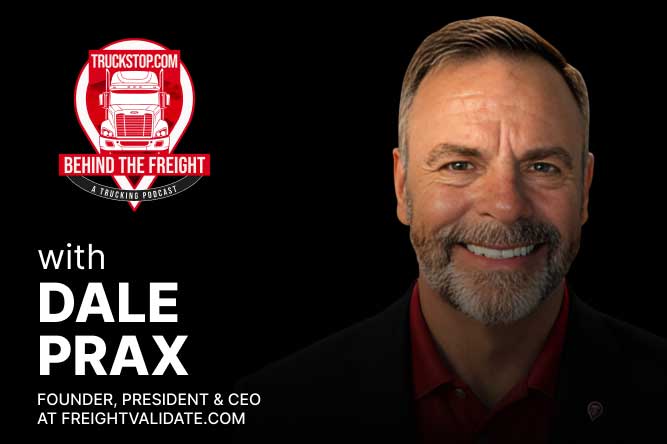
Stopping freight fraud and protecting your carrier authority in trucking (with Dale Prax)
Listen up!
Check out our podcast, Behind the Freight, where industry experts talk all things trucking.
Freight fraud and identity theft result in direct hits to your paycheck. It doesn’t take much these days for a bad actor to obtain an MC number and start stealing loads from honest operators. The schemes are getting more sophisticated, the volume is growing, and carriers are the ones absorbing the damage.
That came through clearly in a recent episode of Behind the Freight, where Todd Waldron and John Howland spoke with Dale Prax, Fraud Advisor at Truckstop.com and founder of Freight Validate, about why fraud is accelerating and what you can do to protect your carrier authority.
Access the full episode of Behind the Freight:
The rise of the $300 scam
The surge in freight fraud we’re seeing today often traces back to the pandemic. During that time, many companies hired and trained overseas workers to handle logistics operations. Once those jobs disappeared, some of those individuals took their insider knowledge and launched fake freight operations of their own. What they discovered is that the barrier to entry is dangerously low.
For just $300, a scammer can purchase operating authority and be in business the same day. This is why the industry is now processing 6,000 new MC number filings every month, many belonging to people who should never have been granted entry.
The 2025 Freight Fraud Report put the scale in plain terms: Truckstop reviewed more than 63,000 entities in a single year as part of its work to keep the load board safe — and identity fraud was the leading threat, with over 14,000 identity checks failing during carrier onboarding alone.
For owner-operators already managing tight margins, a single fraudulent load can wipe out what took weeks to build.
“These bad guys are the enemy to our trucking industry. They’re an enemy to our good truck drivers.” — Dale Prax
The vetting double standard
There is a serious gap in logistics safety when it comes to who gets scrutinized and who doesn’t.
Carriers are the most vetted participants in the entire supply chain. Roadside inspections, new entrant audits, safety reviews are only a few routine inspections carriers face.
Shippers and brokers have different reality.
As Dale noted: “You can spend twenty years in this thing and never been seen by anybody from the federal government.”
His research found that nearly 30% of freight brokers and intermediaries have bad data sitting in the federal database. The bad data includes fake phone numbers, non-existent email addresses, outdated business information, and etc.
The lack of oversight creates a near-perfect hiding place for fraudulent operations. It’s a core reason double brokering has become so hard to stamp out. When the entities controlling load distribution face almost no accountability, bad actors have every incentive to stay in the game.
New FMCSA rules on double brokering prevention have put more pressure on the problem, but enforcement still lags. Knowing the warning signs remains your first line of defense.
How to spot a trap at the dock
Protecting your business starts long before you back into a dock. A few red flags worth knowing:
- A rate that’s too good to be true. If someone offers $6,000 for a short haul like Miami to Atlanta, that’s a warning sign, not an opportunity. “The reality is no paycheck. Because you’re not going to get paid.” — Dale Prax
- Double brokering language. Watch for phrases like “sister company” or instructions to divert to a warehouse not listed on your paperwork. These are classic moves in a trucking scam playbook that carriers encounter more often than most people realize.
- Any contact that isn’t straight with you from the start. Dale’s standard here is clear-cut: “Anytime that guy’s not truthful to you, don’t give him a second chance.” If someone bends the truth early, don’t hand them access to your equipment.
Protecting your operating authority
Authority protection comes down to asking the right questions and trusting your instincts when something feels off. You have every right to know exactly who you are doing business with before you move a single mile.
The Q1 2026 Freight Fraud Trends Report shows audited accounts up 13% quarter over quarter and identity fraud attempts continuing to climb — so the pressure isn’t letting up. Tightening your own verification processes is how carriers push bad actors out of the industry and keep their operations profitable.
Listen to the full conversation with Dale Prax to get the specific steps you need to stay protected.




Get helpful content delivered to your inbox.
Sign up today.
Find high-quality loads fast, get higher rates on every haul, and access tools that make your job easier at every turn.






.png)

.png)

