

Truckstop 2025 Freight Fraud Report: What 63,000 Fraud Checks Reveal About Prevention
Gain a deeper
Understanding of the spot market.
Price every load right and make more money. Truckstop's Spot Market Insights is a must-have resource.
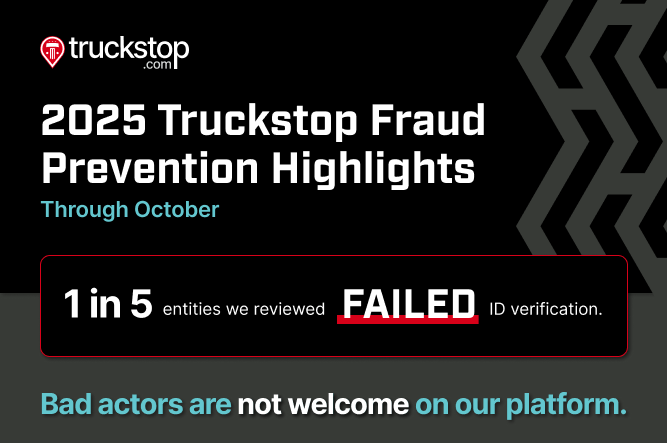
In 2025, Truckstop.com reviewed more than 63,000 entities as part of our ongoing work to keep the load board safe and reliable. Because of advances in technology, such as AI voices that can mimic real people on a phone call, what used to stand out as suspicious now blends into everyday communication. Scams are getting harder and harder to recognize without the right tools. For this reason, we believe that our vigilance on behalf of the industry is more important than ever.
This report shares what our data reveals about how fraud is evolving and the steps brokers, carriers, and shippers can take to protect their businesses. Because fraud prevention isn’t about reacting after something goes wrong, it’s about understanding how the landscape is changing and taking action now to keep freight moving safely.
A closer look at the 2025 fraud data
The numbers tell a familiar story: most fraud starts with small details that don’t add up—like an ID that doesn’t match, a phone number that seems off, or missing authority information.
More than 14,000 identity checks failed during RMIS carrier onboarding, most tied to invalid IDs, mismatched photos, or phone numbers that couldn’t be verified. Each of these details may seem small but can signal larger risks. A quick phone call or cross-check against FMCSA records often makes the difference between a secure transaction and a potential problem.
Another 5,525 accounts were denied because they didn’t meet qualifications or authority requirements. Those rejections are proof that strong verification processes protect the network before issues arise.
Truckstop’s risk and trust teams also investigated over 600 reported cases of fraud, reviewing each from both the broker and carrier perspectives. Many involved spoofed emails, stolen credentials, or falsified contact information — examples of how easily real data can be manipulated.
The takeaway: while freight fraud is getting more sophisticated, attention to detail still makes a huge difference. Consistent verification, communication, and adherence to set approval standards remain the strongest safeguards brokers and carriers can use to protect their business.
3 freight fraud trends to watch in 2026
Looking beyond the numbers, there are three clear trends worth keeping an eye on with regards to freight fraud heading into 2026. New technologies ,like AI, play a big role in shaping these trends. The same tools that make operations faster and communication easier have also made it simpler for fraud to blend in.
1. Identity fraud is getting more sophisticated
AI-generated documents and photos are making it harder to spot fake credentials. Fakes that used to be obvious, due to things like mismatched fonts or blurry scans, now look professional and legitimate.
The solution: Layered verification has become essential. We simply can’t rely on our eyes alone anymore.
Before onboarding a new carrier or working with a new broker, confirm the details that matter most:
- Check DOT and MC numbers, authority status, and insurance in the FMCSA database.
- Call the phone number listed on the FMCSA site or the carrier’s official website to confirm contact details.
- Request and verify the Certificate of Insurance directly with the insurance provider.
- Review paperwork for inconsistencies in company name, address, or banking information.
Manual verification can take time, but skipping it can cost far more. Tools like RMIS simplify this process by layering ID checks, insurance validation, and carrier history in one place, giving brokers the confidence to move forward with verified partners.
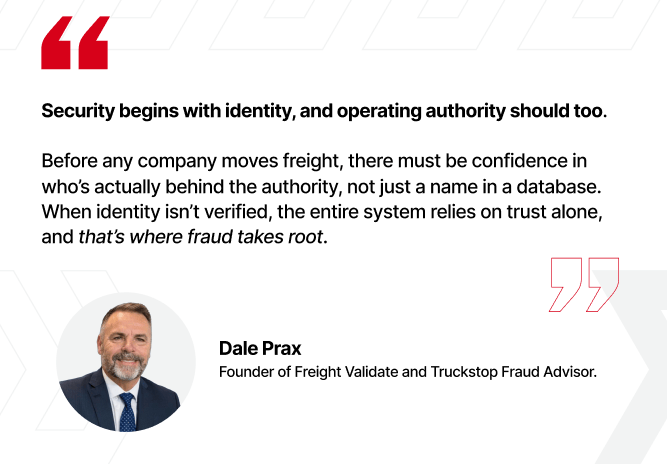
“Security begins with identity, and operating authority should too. Before any company moves freight, there must be confidence in who’s actually behind the authority, not just a name in a database. When identity isn’t verified, the entire system relies on trust alone, and that’s where fraud takes root.” – Dale Prax, CEO of Freight Validate and Truckstop Fraud Advisor.
2. Communication spoofing is on the rise
One of the fastest-growing fraud tactics in freight involves spoofing phone numbers and email domains. A call or email that appears to come from a trusted contact may, in reality, be from a copycat.
The solution: The best defense against spoofs is to verify through a separate channel. If something feels off, hang up and call the number listed on an official profile or FMCSA record or ask that the person switch to a video call. Sometimes, the simple solutions work best.
The same awareness applies within your own team. Use secure, centralized channels for communication about loads and payments. Verification isn’t just about carriers — it’s also about ensuring your internal processes keep communication consistent and traceable.
3. The targets of identity theft are broadening
Fraud isn’t always external. Brokers and carriers are now targets too. Stolen personal information or business credentials can be used to impersonate legitimate companies — putting your reputation at risk.
The solution: Avoid sharing sensitive details over email or text, use secure portals for document uploads, and make sure company contact information is kept current in FMCSA records. The stronger your own identity management, the harder it is for someone else to use it.
In the back office, automation can add another layer of protection. Denim manages payments, collections, and invoices within a secure system. It also gives brokers control over payment timing, including the option to restrict QuickPay to carriers they’ve already moved more than one load with. These safeguards help prevent new or compromised accounts from exploiting early payment programs.
Staying ahead of emerging trends
Taken together, these trends show that fraud is evolving across every side of the transaction. Identity theft, phishing scams, and impersonation attempts are becoming more common — affecting anyone involved in moving freight. Awareness and verification are now essential at every step.
To stay protected:
- Examine links and URLs carefully before logging in or sharing information. Spoofed websites often mimic legitimate portals to steal credentials.
- Verify company details independently using FMCSA records and confirmed contact information.
- Avoid sharing sensitive data like banking details or EINs until a signed rate confirmation is in place.
- Rely on direct communication. If someone avoids a phone call or insists on email-only communication, it’s a red flag.
A few minutes of verification can prevent costly losses and protect the reputation and security of everyone involved in the transaction.
Building a safer freight network with Truckstop.com
Freight fraud is a shared challenge, but it’s one the industry can manage together. Every verified carrier, confirmed contact, and secure transaction helps strengthen the network broker and carriers rely on to do business with confidence.
Truckstop is committed to keeping our marketplace safe, reliable, and trusted. Our teams continuously monitor for risk, investigate reports, and improve the systems that power the Truckstop Load Board — ensuring brokers and carriers connect with verified companies every time they move a load.
Protect your network, your reputation, and your revenue. Get started today!




Get helpful content delivered to your inbox.
Sign up today.
Find high-quality loads fast, get higher rates on every haul, and access tools that make your job easier at every turn.






.png)

.png)

