

The complete guide to fuel management for trucking
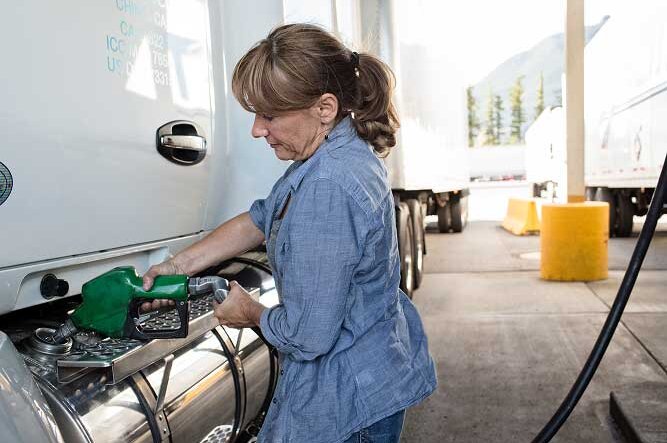
Fuel up.
Save big.
Save up to $2 a gallon on fuel with the Truckstop Fuel Card.
Fuel is the expense that never takes a day off.
You can negotiate a better rate, find a shorter backhaul, or cut a few dollars from your maintenance budget. But every mile you drive, fuel is costing you money.
For most owner-operators and small fleets, diesel accounts for somewhere between 20 and 30 percent of total operating costs. Some months, it goes higher. And when fuel prices spike, those margins compress fast.
This guide walks through the full picture for fuel management:
- Where you buy fuel and when
- How you route loads to avoid wasted miles
- How surcharges work and how to negotiate them
- What clean tracking looks like
- How to protect yourself from fraud.
Get a few of these right and you’ll feel it in your take-home. Get all of them working together and you’ve built a real business advantage.
Why fuel management is critical for owner-operators and small fleets
Big fleets have a built-in edge on fuel. They buy in volume, negotiate direct contracts with fuel chains, and have dedicated staff tracking cost per mile across every unit. When fuel prices move, they adjust.
Owner-operators and small fleets don’t have those advantages. You’re buying fuel one stop at a time, sometimes making the call at the pump with incomplete information, and dealing with IFTA paperwork on your own. You’re also more exposed to price spikes because you don’t have the cushion that comes with scale.
That exposure cuts both ways. When you manage fuel well, you can actually outperform what the numbers on paper suggest. When you don’t, fuel costs quietly eat through earnings you thought were solid.
The carriers who understand this treat fuel as an active part of their business, not a fixed cost they accept without question. Every dollar saved per mile, every deadhead mile avoided, every wasted idle hour eliminated, those things compound over thousands of miles.
Start with your fuel cost per mile
Before you can manage fuel costs and improve your trucking margins, you need to know what they actually are. That starts with two numbers: your average miles per gallon and your fuel cost per mile.
Your MPG is something you should track regularly, not just guess at. If you’re running a loaded truck at highway speeds, most Class 8 trucks average between 6 and 7.5 MPG in real-world conditions, according to NACFE’s Fleet Fuel Study. Well-optimized fleets push toward the higher end of that range, while older equipment, heavier loads, and mountainous terrain pull it down.
If you’re consistently running below 6 MPG, it’s worth implementing a few strategies.
- Check tire pressure
- Regularly change engine and air filter maintenance
- Drive at speed limits
- Optimize routes to avoid terrain and elevation changes
Fuel cost per mile is your fuel spend divided by total miles driven in a given period. If you’re burning 2,000 gallons a month at $4.00 per gallon, that’s $8,000 in fuel. If you drive 15,000 miles in that same month, your fuel cost per mile is roughly $0.53. That number matters because it directly affects whether the loads you’re accepting are actually profitable.
A lot of carriers know their gross revenue per mile. Fewer know their cost per mile with the same precision. The gap between those two numbers is where your business lives.
Once you know your baseline, you can track averages over time in a profit and loss statement and make decisions to improve your bottom line. You’ll also have something concrete to bring to the table when negotiating surcharges or evaluating whether a load pencils out.
How to improve fuel efficiency from planning to the pump
Fuel efficiency is the result of choices made before you leave the yard, while you’re on the road, and in how you maintain your equipment. Each one affects your MPG and your cost per mile.
Route planning
Deadhead miles are the most straightforward place to start cutting fuel costs. Empty miles come at a real cost: fuel, time, and wear on your vehicle. Yet they generate zero revenue. For an owner-operator, that’s money going straight out the door.
Route planning isn’t just about avoiding empty miles, though. It also means choosing roads that fit your equipment, avoiding elevation changes that burn extra fuel, and staying off routes that force unnecessary stop-and-go driving. A shorter route on paper isn’t always the cheapest one in practice.
Planning your backhaul before you deliver the outbound load is one of the most practical habits you can build. The best truckers treat every load as the first half of a round trip. Once you know where you’re delivering, you start thinking about what’s available on the way back and whether it’s worth repositioning a bit to get a better-paying haul out of a strong lane.
Truckstop’s Fuel Desk, available on Load Board Advanced and Pro plans, gives you fuel-efficient routing based on your truck’s actual MPG and daily diesel prices, so you’re stopping where it makes sense financially, not just wherever you’re running low. It also shows outbound and inbound lane rates so you can make smarter positioning decisions.
The Backhaul Search feature takes it a step further, letting you find return loads from your delivery location before you ever drop the trailer, so you’re not scrambling for a backhaul after the fact.
Driving habits
Two drivers running identical trucks on the same lane can get meaningfully different fuel mileage based on how they drive.
Speed is the biggest single variable. For most Class 8 trucks, fuel economy drops noticeably above 65 mph, and the numbers get worse the faster you go. A driver consistently running 75 mph is burning significantly more fuel per mile than one running 62, even though the difference in drive time on most hauls is relatively small.
Idle time is another one. An idling truck burns roughly a gallon of fuel per hour. It adds up faster than most drivers expect. If you’re idling two hours a day on an average workday, that’s somewhere around 500 gallons per year going nowhere.
Maintenance
Several common maintenance issues quietly drain fuel economy without triggering a breakdown:
- Under-inflated tires add rolling resistance on every mile
- Clogged air filters force the engine to work harder than it should
- Worn injectors affect combustion efficiency over time
- Poor wheel alignment increases drag and uneven tire wear
Most of these are fixable through routine pre-trip inspections and scheduled maintenance. Consistent tire inflation and regular filter changes are low-cost actions with real fuel savings attached.
How to save money on fuel by choosing where and when you buy
Two trucks driving the same route and putting the same miles on the road can pay very different amounts for fuel, depending on where and when they stop.
Fuel prices vary significantly across state lines, and that variation isn’t random. It’s tied to state fuel taxes, which are factored into the price at the pump.
A state with high fuel taxes will show a higher pump price even if the actual wholesale cost of the diesel is identical. This matters because under the International Fuel Tax Agreement (IFTA), you pay fuel taxes based on where you burn the fuel, not where you buy it. That creates opportunities to fuel up strategically in lower-tax states and let IFTA settle the difference.
Timing also makes a difference. Fuel prices tend to be higher during peak travel seasons and at high-traffic locations. Truck stops right off major interstate exits often charge more than fuel stops a couple miles down the road. If your route gives you flexibility, building in stops at competitive locations can save meaningful money over time.
IFTA fuel tax reporting and how to stay compliant without the scramble
If you’re running across state lines, IFTA is part of your life. The International Fuel Tax Agreement lets carriers report and pay fuel taxes under a single license rather than dealing with each state separately. The downside is that it requires accurate record-keeping on miles traveled and fuel purchased by jurisdiction.
IFTA reports are due quarterly. The filing process isn’t complicated once you understand it, but it can get messy fast if you haven’t been keeping clean records throughout the quarter. Scrambling to reconstruct fuel purchases and mileage from memory at the end of March, June, September, or December is a stressful way to operate.
The solution is building IFTA tracking into your regular workflow rather than treating it as a once-a-quarter event. That means logging fuel purchases consistently, tracking miles by state, and using tools that do the math for you.
Fuel Desk on the Truckstop Load Board calculates your IFTA taxes as you go, which means you’re not starting from scratch when filing time comes around. Pair that with a fuel card that automatically logs your purchases, and a lot of the manual work disappears.
Fuel cards for truckers and how to get a discount on every gallon
A fuel card is one of the simplest ways to reduce what you pay at the pump. The basic idea is straightforward: you get a discounted rate per gallon at participating locations, and in exchange, you use the card instead of cash or a personal credit card.
Depending on the program and your volume, discounts typically range from a few cents per gallon to 30 cents or more at certain networks. For an owner-operator putting 1,000 gallons through the truck each month, even a 10-cent discount adds up to $1,200 per year. That’s before factoring in any other benefits.
Beyond the discount, fuel cards give you cleaner records. Every purchase is logged automatically, which simplifies expense tracking and makes IFTA reporting a lot easier because you’re not piecing together receipts at the end of the quarter. Some cards integrate directly with reporting tools, so your fuel data flows right into your filing process.
There are a few things to watch for when choosing the best fuel card:
- Network coverage: a card that only works at specific chains won’t help if those locations aren’t on your routes
- Monthly fees and minimum usage requirements that can eat into a discount that looks good on paper
- Out-of-network costs, which vary widely between programs
- Whether the card integrates with IFTA reporting tools
The Truckstop Fuel Card is built specifically for owner-operators and saves up to $2 a gallon at participating locations across the country. Before you apply, you can check the Fuel Finder Map to see which truck stops are in the network and what the per-gallon discount looks like at each location, so you know exactly what you’re getting on your regular routes.
Fuel card fraud and how to protect your business at the pump
Fuel card fraud and scams are a real and growing problem in trucking.
It comes in several forms. External fraudsters install skimming devices at fuel pumps to steal card data. Phishing emails and texts try to trick you into handing over account credentials. In fleet situations, internal fraud from drivers using cards outside authorized routes or times is also a documented issue.
The consequences are financial and immediate. A compromised card or stolen account can cost thousands of dollars before you even realize something is wrong.
There are practical steps that reduce your exposure significantly:
- Use a unique PIN for every card and never share it
- Choose fuel pumps closest to the station entrance, where staff are more likely to spot tampering
- Review transaction records regularly so anomalies don’t go unnoticed
- For fleets, set daily spending limits and approved time windows on each card to make unauthorized use harder to pull off undetected
Fuel pricing, surcharges, and cash flow
Fuel costs don’t just affect what you spend at the pump. They affect what you charge, how you get paid, and whether the loads you accept are actually making you money. These three things are connected, and understanding how they work together is part of running a profitable operation.
How fuel pricing affects load decisions
Your fuel cost per mile should be a filter, not just a tracking number. It should affect which loads you’re willing to take and at what rate.
When fuel prices go up, the loads that looked marginal before become money-losers. A load that barely covered your costs at $3.50 diesel might put you in the red at $4.50. If your rate hasn’t moved and your fuel costs have, you’re working for less without realizing it.
Carriers who know exactly what they need per mile to break even can walk away from bad loads without second-guessing themselves. The ones who don’t often take freight they can’t actually afford to haul.
Fuel pricing also affects lane dynamics. When prices spike, carriers start avoiding long, low-rate lanes in fuel-heavy terrain. That shifts supply and can create opportunities in lanes that open up. The U.S. Energy Information Administration publishes weekly retail diesel prices by region, updated every Monday, and gives you a current national and regional baseline to work from when evaluating loads.
How to negotiate fuel surcharges and get paid for what fuel actually costs you
A fuel surcharge is the mechanism by which carriers pass some of the fuel cost burden back to shippers and brokers. When fuel prices are above a set baseline, you charge an additional per-mile fee to offset the increase. Without a surcharge, every fuel price spike comes straight out of your pocket.
Most established carriers have fuel surcharges built into their agreements. Shippers are used to paying surcharges. It’s a normal part of the freight pricing conversation. If you’re not charging one, you’re absorbing costs that other carriers are getting compensated for.
The math involves knowing your truck’s MPG, your baseline fuel price, and the current price at the pump. From there, you can calculate a per-mile surcharge that makes sense for your operation. The key is to set a baseline that reflects your actual costs rather than an industry average that may not match your routes or equipment.
Negotiating a good surcharge also means knowing what the market looks like. Brokers will push back if your rate is significantly above what other carriers are charging in that lane. Coming in with solid data on rate trends and current market conditions gives you something to stand on.
Truckstop’s Rate Insights tool, available on the Pro plan, shows you same-day rate data based on real loads in the market. When you’re sitting across from a broker, that information gives you a real position rather than a gut feeling.
Fuel advances, cash flow, and keeping your business moving between loads
Fuel is an upfront cost. You pay for it before you deliver the load, before the invoice goes out, and long before the broker sends payment.
For owner-operators running tight margins, that timing gap is a real problem. You need diesel to do the job, but the money from the last job may not have cleared yet.
This is where fuel advances come in.
A fuel advance is money paid to a carrier before delivery, typically a percentage of the load rate, specifically to cover fuel costs on the haul. Most brokers offer them, and for carriers without a large cash cushion, they’re a practical tool for keeping the wheels turning.
The catch is that fuel advances aren’t free money. They’re deducted from your final settlement, sometimes with a fee attached. Used consistently as a crutch, they can mask a cash flow problem that’s slowly getting worse. Used strategically for the right loads, they’re a normal and legitimate part of how freight gets moved.
A few things worth knowing about fuel advances before you rely on them:
- Not all brokers offer them, and terms vary. Some pay a flat amount, others a percentage of the load rate. Always confirm before you accept the load.
- Fees for advances, where they exist, are typically small but worth factoring into whether the load actually pays what it appears to.
- Fuel advance fraud is a documented scam. Bad actors impersonate legitimate carriers to book loads and collect advances on freight they never intend to haul. If you’re a carrier, this matters because it has contributed to some brokers tightening advance policies across the board.
- Factoring companies offer an alternative approach. Instead of waiting 30 to 60 days for broker payment, you sell the invoice to a factoring company for immediate cash, typically at a small percentage fee. Factoring provides predictable cash flow without depending on advance policies load by load.
The broader cash flow principle is this: fuel costs hit immediately, but revenue arrives slowly. Carriers who plan around that gap, whether through advances, factoring, or building a cash reserve, run more stable businesses than those who treat every slow-pay period as a surprise.
What a strong fuel management strategy looks like day to day
Fuel management doesn’t require a lot of complicated systems. It requires consistent attention to a handful of decisions that compound over time.
Here’s what it looks like when it works:
Before a load, you check the route using a tool like Fuel Desk to identify the most fuel-efficient path and the best stops along the way. You know what the load pays per mile, you know your cost per mile, and you know the load is worth taking. You’ve already started thinking about your backhaul.
At the pump, you’re using a fuel card that gives you a per-gallon discount and logs the purchase automatically. You’re not stopping wherever happens to be convenient. You’ve already checked where the best price is along your route.
On the road, you’re aware of how speed affects your fuel economy. You’re not racing to the dock only to sit for three hours. You’re managing idle time.
At the end of the quarter, your IFTA filing is straightforward because you’ve been tracking all along. Your fuel card data and your Fuel Desk records have done most of the work.
And when you sit down with a broker to discuss rates on a lane you run regularly, you come in with Rate Insights data on what loads in that corridor are actually paying. You know what your fuel surcharge needs to be, and you know how to defend it.
None of that is complicated. But it requires treating fuel as something you actively manage rather than just something you pay.
Running lean means managing fuel like a business
Independent carriers and owner-operators are running lean businesses in a market that doesn’t give much away. Every dollar saved on fuel is a dollar that stays in your pocket. Every empty mile eliminated is money that doesn’t disappear.
The carriers who do well over time aren’t just the ones who find the most loads. They’re the ones who understand their costs, make deliberate decisions, and use the tools available to them. Fuel is one of the clearest places to build that kind of discipline.
Start with the numbers you know, fill in the gaps, and build from there.
Ready to cut fuel costs on your next haul? Truckstop’s Fuel Desk is available on Load Board Advanced and Pro plans. It helps you plan fuel-efficient routes, find the best stops along the way, and track IFTA automatically.




Get helpful content delivered to your inbox.
Sign up today.
Find high-quality loads fast, get higher rates on every haul, and access tools that make your job easier at every turn.






.png)

.png)

