

Who really drives freight: A closer look at carriers, costs, and market forces
Listen up!
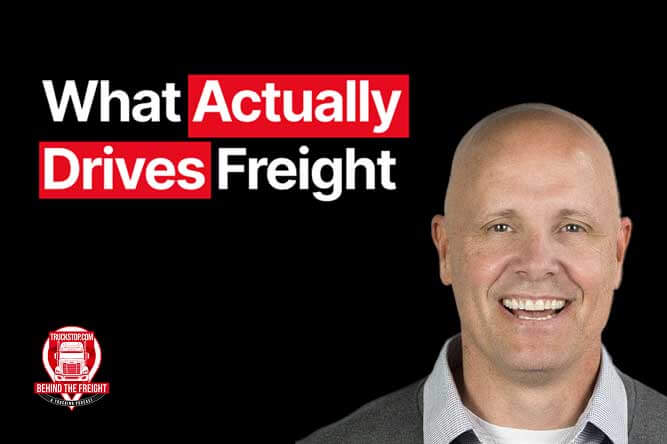
Check out our trucking podcast, Behind the Freight.
Freight rates make headlines. Capacity swings get analyzed. But the people actually keeping freight moving rarely get the same attention. If you run a truck, you already know the gap between what analysts say and what running a real operation looks like on a Tuesday morning with a tight window and a broker who is not picking up.
That gap is exactly what came through in a recent episode of Behind the Freight, where Todd Waldron and John Howland spoke with Brent Hutto about the forces shaping trucking in 2026, from how carrier make money to what market conditions mean for the decisions you are making every day.
Access the full episode of Behind the Freight:
Carriers are the ones keeping freight moving
Every load that ships, every delivery that hits its window, that happens because a carrier made it happen. The commitment it takes to run a truck day after day tends to be invisible to everyone except the people doing it.
Carriers make decisions that affect whether freight arrives on time, whether costs stay manageable, and whether the business holds up across different market conditions. When you are running a small fleet or working as an owner-operator, those decisions fall on you directly. There is no buffer.
That level of responsibility is worth taking seriously. Understanding the full picture of what drives your numbers, not just the rate on a given load, is where most of the real work happens.
The business behind the wheel
Driving is the job, but running a trucking operation means managing everything that surrounds it. Fuel, maintenance, insurance, and deadhead miles are the variables that separate a good month from a rough one.
As Brent Hutto put it in the episode: “Owner operators struggle in running their business. They don’t struggle in being a great truck driver. They struggle with really understanding the business aspect of that.”
What makes the difference over time is knowing your actual cost per mile. That number tells you whether a load is worth taking, whether a lane makes sense, and where you have room to push back on a rate. Carriers who track what it actually costs to move a load are in a much stronger position than those making decisions on feel alone.
Freight tools and rate data have gotten better at helping you make those calls faster. When you can see what a lane is actually paying right now, you go into a negotiation with real numbers rather than a guess.
How freight markets move and what that means for your rates
Rates shift based on regulation, capacity changes, and broader swings in the economy. None of that is fully within your control, but understanding the patterns gives you something to work with.
When capacity tightens, rates tend to climb. When there are more trucks than loads, rates soften and you feel it fast. Understanding how spot freight rates work helps you read a market before you commit to a lane, so you are not locking in at the bottom of a rate swing.
Regulatory changes around hours of service or equipment requirements can also shift how many trucks are effectively available at a given time. These regulatory shifts move rate levels across the board, which is why paying attention to what is changing and why helps with planning, even when conditions are unpredictable.
Why smaller carriers can move faster than larger fleets
One real advantage owner-operators and small fleets have is the ability to adjust quickly. You can change lanes, shift freight types, or pull back on a region without running decisions through layers of management.
Hutto said it directly: “Control what you can control. You need to control the efficiency of your operation. No one can change faster than a one or two or three truck owner operator operation. Nobody.”
That speed matters most when market conditions change. A softening lane is easier to exit when you are not locked into arrangements built for a different market. Knowing how to negotiate rates before conditions shift gives you an edge that larger operations sometimes trade away in exchange for volume commitments.
Fuel management is another area where smaller operations often have real room to improve margins. Small changes in driving habits, route planning, and how you buy diesel add up over a full year in ways that can offset a stretch of soft rates.
What it takes to build a freight business that holds up
Staying in trucking long-term comes down to a few fundamentals: knowing your costs, being selective about which loads you take, and building relationships that create steady freight opportunities.
Expenses beyond fuel can add up in ways that are easy to miss until they are eating your margins. Getting a clear picture of all the costs of running your operation is the starting point for knowing what rates you actually need to make a lane work.
Consistency matters too. Showing up on time, communicating early when something changes, following through on what you commit to. These things build your reputation in ways that affect what freight you get access to over time.
Broker relationships matter more than many carriers give them credit for. A broker who knows you show up and communicate well will keep you in mind when good loads come through. Understanding how brokers work with carriers can help you get more out of those connections over the long run.
The freight market Brent Hutto, Todd Waldron, and John Howland discuss in this episode is not simple, but the principles for staying profitable in it are consistent. Know your numbers, protect your margins, and build relationships that give you access to better freight.
If you want real context on what is moving the market right now, this conversation is worth your time.



Get helpful content delivered to your inbox.
Sign up today.
Find high-quality loads fast, get higher rates on every haul, and access tools that make your job easier at every turn.






.png)

.png)

