

The impact of infrastructure on the trucking industry
Gain a deeper
Understanding of the spot market.
Price every load right and make more money. Truckstop's Spot Market Insights is a must-have resource.
Trucking keeps America moving. If freight doesn’t move efficiently, shelves stay empty and businesses feel it fast. With trucking responsible for nearly three-quarters of the nation’s freight, small slowdowns quickly turn into big problems across the supply chain.
But the trucking industry only succeeds with the support of infrastructure. Today’s highways are aging, and congestion can bring an entire route to a crawl without warning. Companies soon start seeing infrastructure’s impacts on fuel and repair costs.
For carriers, brokers, and shippers, weak infrastructure means wasted money and added stress. Understanding how infrastructure affects trucking makes it easier to plan smarter routes and protect your margins.
The current state of U.S. infrastructure
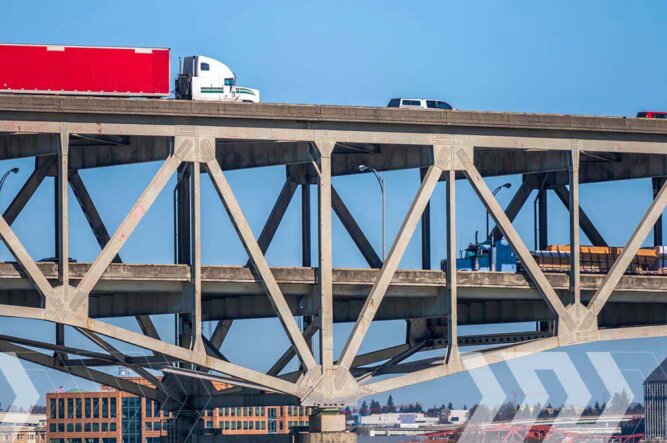
The U.S. is a big economic force, but its infrastructure is surprisingly behind. Roads, bridges, and traffic are all suffering:
- Poor infrastructure quality: The American Society of Civil Engineers recently gave America’s infrastructure a C, its highest grade ever. There’s some good progress, but overall, the country has a lot of work to do.
- Unsafe road conditions: Nearly four out of 10 major roads are in poor or mediocre condition. That means more wear and tear on equipment, slower trips, and higher operating costs for carriers.
- High congestion: The American Transportation Research Institute reports that traffic delays cost the trucking industry more than $100 billion a year in lost time and wasted fuel. Outdated bridges, bottlenecks, and checkpoints only make delays harder to avoid. Without funding and repair projects, America’s freight network will continue to run on a stretched-thin system.
How poor infrastructure drains profit
Every mile on rough roads or stuck in traffic chips away at your bottom line. Poor infrastructure hits carriers directly, slowing them down and risking driver safety. Here’s where poor infrastructure starts to really hurt.
- Rough roads: Potholes and uneven pavement lead to higher maintenance costs, blown tires, and suspension damage. That means more shop time, higher repair bills, and fewer revenue-generating miles.
- Traffic jams: Stop-and-go driving wastes fuel and burns through hours-of-service (HOS). The longer drivers are stuck in traffic, the higher the chances of missing a delivery window.
- Unsafe bridges: Older or poorly maintained bridges cannot safely carry the weight of trucks. Drivers are forced to take detours that add miles and fuel costs to the route.
- Illegal parking: Drivers need legal parking spots or risk HOS violations. They might have to make unsafe road stops or get into fatigue-related accidents.
The industry-wide ripple effects
When infrastructure breaks down, the consequences hit every part of the trucking industry. Carriers feel the immediate sting through higher maintenance costs and wasted fuel, but brokers and drivers are affected, too. Brokers deal with missed pickup or delivery times, which affects customer relationships. Shippers get hit with late loads, storage fees, and reduced confidence in carrier reliability. Everyone’s margins become tighter when freight can’t move on schedule.
The ripples also travel into supply chains. A delayed truck might throw off production runs or lead to empty store shelves. Companies are left scrambling to adjust plans, reroute freight, or cover unexpected costs. Every extra mile driven or hour lost multiplies across thousands of loads, eventually leading to higher costs for businesses and consumers.
Drivers feel these challenges every day, and some eventually decide it’s not worth the stress. The job is already demanding, but constant stress from detours and poor parking makes it harder to keep drivers happy. When routes get harder to run and parking gets harder to find, it becomes tougher to keep experienced drivers behind the wheel. A labor shortage snowballs the existing infrastructure issues, and the cycle continues.
The future of U.S. infrastructure
The good news is that new investments could lead to safer, more efficient freight movement. Technology like smart roads and better infrastructure design can streamline traffic and get carriers to their destinations faster. With smarter infrastructure, carriers see fewer surprises and can save money on lost time.
Smart technology
Smart roads and traffic technology use sensors and real-time data to manage congestion and alert drivers to hazards. These systems can flag problem areas early, helping prevent major slowdowns before they happen. These advances can make roadways more efficient and prevent major expenses.
Improved infrastructure
Beyond technology, the roads, bridges, and trucks that are used need improvement. Stronger bridges prevent detours and keep heavy loads moving, even in extreme weather regions. Expanding rest area capacities is another essential step. Safe parking with modern amenities reduces fatigue and makes meeting HOS compliance easier. Plus, adding electric vehicle charging prepares infrastructure for the next generation of trucks.
What carriers can do now
Carriers can’t fix highways or rebuild bridges, but there are steps you can take to protect your business from the impact of poor infrastructure. Planning ahead, bidding smarter, and using the right tools helps you cut costs and keep revenue steady. Here are some practical tips to keep your business moving:
1. Plan around bottlenecks
The American Transportation Research Institute tracks the worst freight choke points every year. If your lanes run through high-congestion areas, build that into your rate or look for alternate routes. Avoid known trouble spots to keep trucks moving.
Carriers can also invest in tracking tools that automatically reroute drivers when they get traffic alerts. Preparing for bottlenecks keeps you ready and on the move.
2. Factor in real costs
Don’t just calculate miles on paper and budget from there. Add in expected delays, off-route detours, and maintenance from rough pavement. The real-world costs are always going to be higher than your best-case paper scenario. Knowing your true costs makes it easier to price loads correctly and walk away from freight that won’t pay off.
3. Secure safe parking early
Parking shortages are a major challenge for drivers. Encourage your team to lock in parking before evening hours. Use customer yards, parking apps, and state rest area resources to plan ahead. The more proactive drivers are about parking, the easier it is for them to rest. They’ll stay HOS-compliant and reduce their accident risk.
4. Build buffer time
With billions in federal infrastructure funds coming in, expect to see construction zones everywhere. If drivers are on routes with heavy construction, add buffer time to schedules. Make sure to update brokers and shippers up front about extra time. Most partners appreciate the transparency, and it helps build stronger long-term relationships.
Use Truckstop.com tools to your advantage
Technology won’t fix the roads, but it can help you make better decisions and protect your profitability. Working with a load board and rate insight tools makes it easier to turn a profit and stay ahead of the competition. Consider using tools like:
- Truckstop Load Board: Use the Truckstop Load Board to find high-quality loads and avoid wasting time chasing freight that doesn’t pay.
- Truckstop Rate Insights: See what lanes are really paying and adjust your bids around tough corridors.
- Truckstop Go™: Get rate information, freight alerts, and instant load booking from anywhere.
Keep freight moving with the right partner
Infrastructure’s impact on trucking is never going away. While improvements are down the road, carriers have to find strategies that make it easier to navigate these conditions. But you don’t have to do it alone. By planning smart routes, factoring in true costs, and using reliable technology, you can stay profitable no matter what the road throws at you.
At Truckstop, we deliver the most trusted load board and the tools you need to run your business. Our solutions help carriers, shippers, and brokers book quality freight and bid with confidence. See how Truckstop can support your operation and help you keep freight moving.




Get helpful content delivered to your inbox.
Sign up today.
Find high-quality loads fast, get higher rates on every haul, and access tools that make your job easier at every turn.






.png)

.png)

