

Breaking down ELD myths vs. reality
What are you waiting for?
Get our powerful TMS for brokers and carriers alike.
Electronic logging devices (ELDs) have been standard for truckers for years. But there’s still a lot of misinformation floating around. Some drivers worry that they’re being spied on or that ELDs will slow their trips down. While ELDs might seem like Big Brother technology, they’re built to help you stay safe on the road.
Let’s set the record straight by breaking down ELD myths versus reality so you can see how they improve the trucking experience.
Myth 1: ELDs track all your moves
ELDs don’t track your every move.
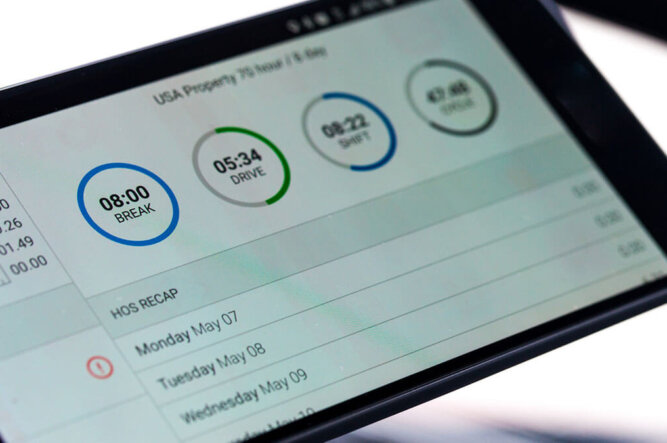
But if they aren’t reading everything, what do ELD devices actually track? ELDs record data required for hours of service (HOS) compliance. This includes things like engine hours, miles driven, movement status, and your location when duty status changes. That’s it. They’re not GPS trackers constantly stalking you while you drive.
When you’re off duty or driving for personal reasons, ELDs switch to privacy mode. They’ll show a general location while you’re driving. Your dispatcher sees roughly where you are, but the Federal Motor Carrier Safety Administration (FMCSA) isn’t following you around. ELD data access is limited and regulated.
Myth 2: ELDs automatically report violations to law enforcement
Drivers might think that ELDs automatically flag them for HOS violations and report them to the Department of Transportation or the FMCSA. This isn’t true.
Your ELD records your driving data. It sends the relevant details to your carrier at specific intervals or by request during a roadside inspection. No one from the government is watching you in real time, waiting to catch you for violations. The FMCSA receives the data if a safety official asks for it. The ELD is there to prevent you from making violations and protect you during disputes. It can warn you before you run out of drive time, so you can pause and stay compliant.
Myth 3: ELDs can shut down your truck
The only person who can shut down your truck is you. ELDs just record engine data. They don’t have a magic kill switch to stop you.
ELDs will alert you when you’re close to your HOS limit, so you can find somewhere to park before time runs out. They won’t cut your power or hit your brakes. This myth comes up because drivers hear about “engine-connected devices” and assume they’re taking over the truck. The ELD won’t stop you if you keep driving over your HOS limits.
Myth 4: Smartphones can replace ELDs
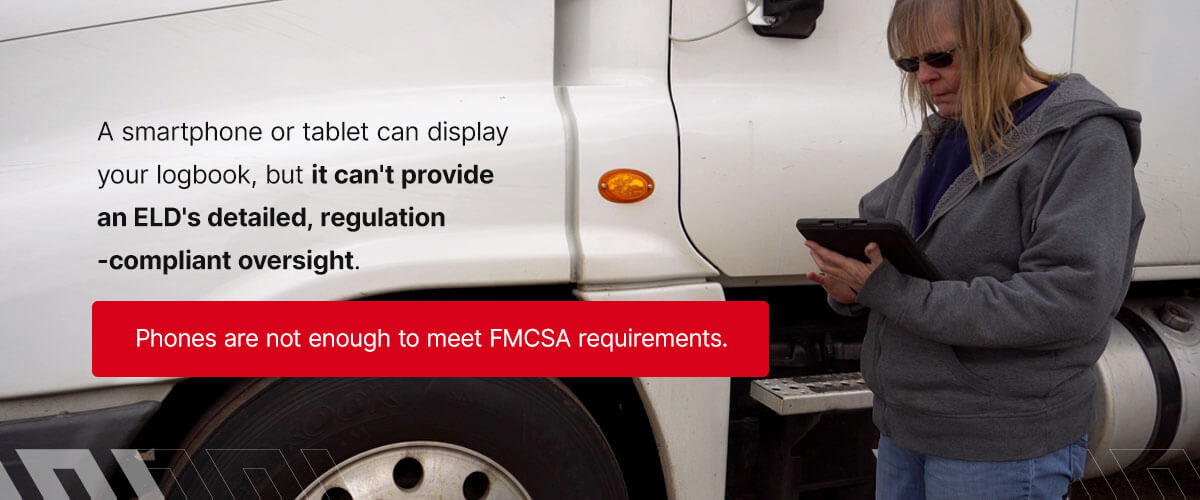
Phones are not enough to meet FMCSA requirements. A smartphone or tablet can display your logbook, but it can’t provide an ELD’s detailed, regulation-compliant oversight. Your device must pair with a certified ELD that plugs into your truck’s engine. That connection lets the system accurately record your driving time and miles.
Myth 5: ELDs are too expensive
ELDs are more affordable than you think. Initially, they were more expensive and limited, but that’s not the case anymore. Since their invention, ELDs have become more affordable and accessible. Many providers offer monthly payment plans in case businesses need extra support.
ELDs can quickly pay for themselves, too. Digital uploads reduce paperwork and HOS violations, which saves you money. If they highlight fuel-saving areas or make inspections quicker, that’s even better for your bottom line.
Myth 6: ELDs hurt driver productivity
ELDs actually help you use your time better. Drivers might think that switching from paper logs to digital costs them hours. The truth is that paper is usually worse for your productivity. Paper logs often round driving time, but ELDs track every minute you drive. That means you can drive down to the last second and avoid missing out on road time thanks to rounding issues.
ELDs also reduce manual work. You don’t have to spend time drawing lines or fixing paperwork errors. Everything updates automatically. Drivers get a more accurate picture of their hours, and they can plan loads more efficiently.
Myth 7: Only large fleets need ELDs
The ELD rule applies to almost all commercial drivers. Some small fleet owners and independent drivers still believe the ELD mandate is only for big carriers. This is not true. The FMCSA requires nearly all drivers who keep records of duty status (RODS) to use an ELD.
Exceptions include:
- Older vehicles manufactured before the model year 2000.
- Short-haul drivers who qualify for time card exemptions.
- Drivers required to keep RODS no more than eight days within any 30-day period.
- Drivers conducting driveaway-towaway operations.
Myth 8: ELDs are complicated to use
Modern ELDs are built for easy usability. Making a device that people struggle to use goes against the goal of the ELD mandate. They’re designed to make HOS tracking easier, so you can stay safe on the road.
Most ELDs plug into the diagnostic port and connect to an app on your phone or tablet. Once you log in for work, the ELD automatically tracks engine hours and duty status. If you get your ELD from a reputable provider, they’ll likely offer training videos. Plus, you can partner devices with user-friendly apps for more efficient operation.
Myth 9: ELDs don’t improve safety
ELDs actually make the roads safer for everyone. By tracking HOS, ELDs help prevent driver fatigue and avoid accidents. When drivers get the rest they need, they’re more alert behind the wheel. Alert drivers are less likely to make mistakes. The FMCSA reports that fleets with ELDs see lower violation rates.
Myth 10: ELDs are just another unnecessary government regulation
ELDs are there to help drivers and carriers. While the FMCSA passed the requirement, the purpose was to make compliance easier and safer for the trucking industry. ELDs mean drivers don’t have to guess at their available hours or worry about paperwork-related holdups during inspections. Everything’s digital and accurate. The truth behind all of these ELD myths and facts is that ELDs help drivers and regulators check everyone for compliance so the industry operates at its best.
What ELDs actually track
ELDs don’t constantly watch you and steal all your data, but what are the ELD’s limitations? These systems only track the information needed for HOS compliance. There are lots of ELD compliance misconceptions floating around, but here’s the data they gather:
- Date, time, and location
- Engine hours
- Vehicle miles
- Driver identification
- Authenticated user
- Vehicle and motor carriers
- Engine power status
- Vehicle motion status
An ELD doesn’t record conversations or watch your face while you drive. It can’t tell how fast you drive between stops or where your favorite fast-food stop is. Understanding these limitations takes the fear out of working. ELDs are designed to collect just enough data to keep you driving legally.
Results you can trust from Truckstop
ELDs are a great tool for staying compliant and reducing paperwork. But they only help with efficiency if you have the right loads and routes. At Truckstop, we build technology that keeps freight moving and your records accurate. Our tools are built for everyone, from owner-operators to growing fleets.
Use the Truckstop Load Board to find the right loads fast and avoid downtime. Once you’re on the go, Truckstop Go™ helps watch for load board alerts and get daily rate information. With nearly 30 years in the industry, we know what it takes to succeed.




Get helpful content delivered to your inbox.
Sign up today.
Find high-quality loads fast, get higher rates on every haul, and access tools that make your job easier at every turn.






.png)

.png)

