

Midwest Corn Harvest Creates Massive Freight Opportunities
What are you waiting for?
Make more money starting now.
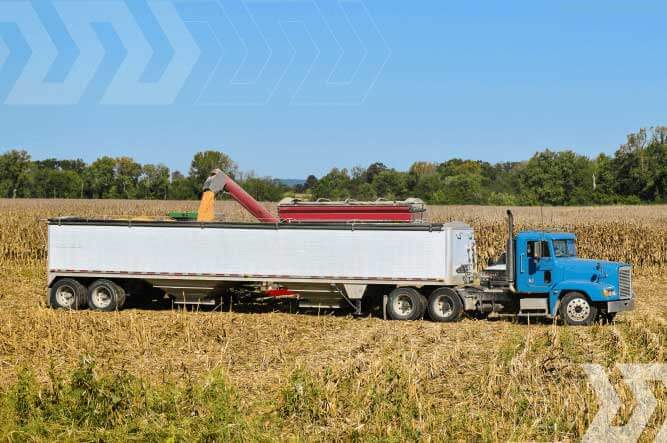
The leaves are starting to change colors across America’s heartland, but for carriers and owner-operators, there is still green to be found in the endless fields of corn ready for harvest. Right now, the Midwest is experiencing its annual agricultural rush, and there is an opportunity for truckers to capitalize on seasonal freight demand.
The Corn Belt by the Numbers
Looking at U.S. corn production data, the concentration of harvest activity lives in the Midwest.
Consider the production percentages across key states:
- Iowa: 18% of national production
- Illinois: 16%
- Nebraska: 10%
- Minnesota: 10%
- Indiana: 7%
- South Dakota: 5%
- Ohio: 5%
- Wisconsin: 4%
- Kansas: 4%
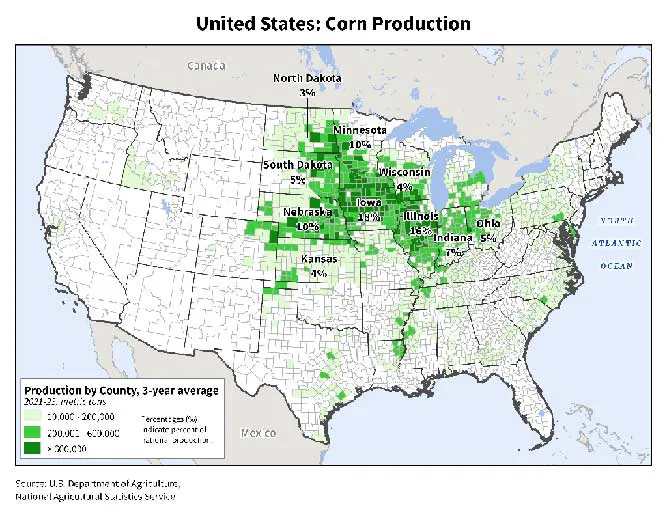
Combined, these nine states represent nearly 80% of America’s corn production, all concentrated in a relatively compact geographic region. As harvest time progresses, this creates an unprecedented logistics challenge that translates directly into freight opportunities.
Why the Urgency is Real
Corn harvest operates on nature’s timeline, not the transportation industry’s convenience. Farmers have narrow windows to get their crops out of the field before weather conditions deteriorate. Once corn is harvested, it needs to move quickly to grain elevators, processing facilities, and export terminals to maintain quality and meet contractual obligations.
This urgency creates several favorable conditions for truckers:
Premium Rates: When time is critical, shippers pay premium rates to ensure reliable transportation.
Consistent Backhauls: The concentrated nature of Midwest corn production means you’re likely to find return loads rather than deadheading out of the region.
Extended Season Demand: While peak corn harvest runs September through November, the grain movement continues through winter and into spring as stored corn moves to processors and export facilities.
Strategic Route Planning for Maximum Opportunity
Smart truckers are already positioning themselves along key agricultural corridors. The production map reveals several high-opportunity zones:
The I-80 Corridor: Running east-west through Nebraska, Iowa, and Illinois, this interstate captures three of the top five corn-producing states. In the map above, counties along this route show the darkest green shading, indicating maximum production density.
The I-35 Corridor: Stretching north-south from Minnesota through Iowa, this route connects Minneapolis grain terminals with processing facilities throughout the Midwest.
The Illinois-Indiana Hub: The concentration of dark green counties in east-central Illinois and western Indiana creates a freight-rich zone with multiple pickup and delivery options within a compact area.
Timing Your Corn Harvest Market Entry
The corn harvest timeline can vary, but generally follows this schedule:
- Mid-August to Early September: Southern edge of the Corn Belt begins harvest
- Mid-September to Early October: Peak harvest activity across Iowa, Illinois, and Indiana
- Late October: Northern areas of Minnesota and Wisconsin complete harvest
- November through March: Stored grain movement to processors and export facilities
The key is positioning yourself in high-production areas during their specific harvest windows, then following the grain as it moves through the supply chain during the off-season.
Corn Harvest Equipment Considerations
Corn hauling requires specific equipment that may impact your earning potential.
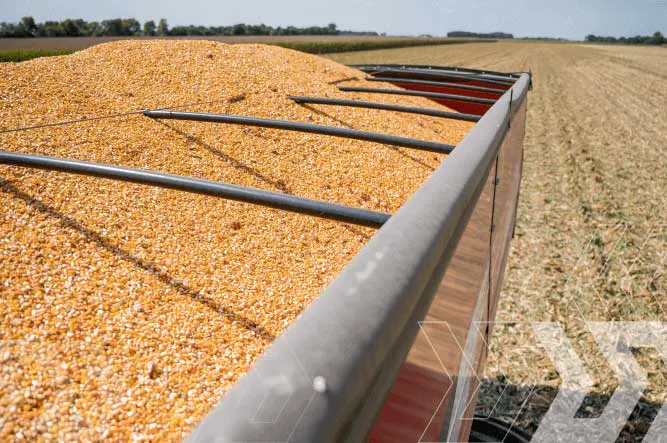
Hopper Trailers: Essential for most grain loads, with proper tarping systems for weather protection.
Weight Distribution: Corn is dense – roughly 56 pounds per bushel – so proper weight distribution is crucial for legal loads.
Cleaning Capabilities: Many facilities require clean trailers, so having wash-out capabilities or access to grain trailer cleaning facilities is valuable.
Take Advantage of the Corn Harvest Demand
The Midwest corn harvest represents one of the most concentrated, time-sensitive freight opportunities in American agriculture. With nearly 80% of the nation’s corn production concentrated in a nine-state region, and harvest timing creating artificial urgency, the economic fundamentals strongly favor truckers who position themselves correctly.
The production density shown in the map above isn’t just agricultural data – it’s a freight demand heat map. The dark green counties represent millions of tons of corn that must move from field to market in a compressed timeframe. For truckers willing to plan strategically and position themselves in high-production areas, the autumn corn harvest season offers some of the year’s most lucrative freight opportunities.
Start planning your routes now. The corn is ready, the farmers are harvesting, and the freight needs to get moving. The question isn’t whether there will be loads available – it’s whether you’ll be positioned to capture them in a timely manner.




Get helpful content delivered to your inbox.
Sign up today.
Find high-quality loads fast, get higher rates on every haul, and access tools that make your job easier at every turn.






.png)

.png)

