

Building trust with carriers when requesting ELD information

What are you waiting for?
Get our powerful TMS for brokers and carriers alike.
Carriers keep electronic logging device (ELD) data to make sure drivers stay compliant with federal regulations. ELD data tells carriers where drivers traveled, how long they drove, and who was driving. That’s sensitive information, so it makes sense that carriers want to protect it. Drivers deserve their privacy on the job.
But sometimes, brokers need to request that data to keep their own work regulation-compliant. Asking for ELD information can sometimes feel like a trust issue for carriers. Being upfront about why you need the information helps keep carrier relationships strong.
Why ELD data requests get tricky
ELD data tells users a lot about how carriers operate. It tracks hours of service (HOS), rest breaks, routes, and driving information. It’s important to have a log of duty status changes and vehicle miles. That level of detail can make carriers uneasy when someone asks for access. Sharing data can feel risky, especially when carriers worry it might be used for more than its intended purpose.
Brokers often need ELD information simply to keep their own records accurate and up to date. If they can see ELD data, they know exactly where their shipments are. It’s easier to schedule drop-offs, provide updates, and ensure everything is moving safely. Brokers have to balance this need for insight with carriers’ hesitance to share private driver information.
How to request ELD data from carriers
Building trust with carriers when requesting ELD information means communicating clearly and only asking for what you need. You can build stronger working relationships while improving your operational insight with the right process.
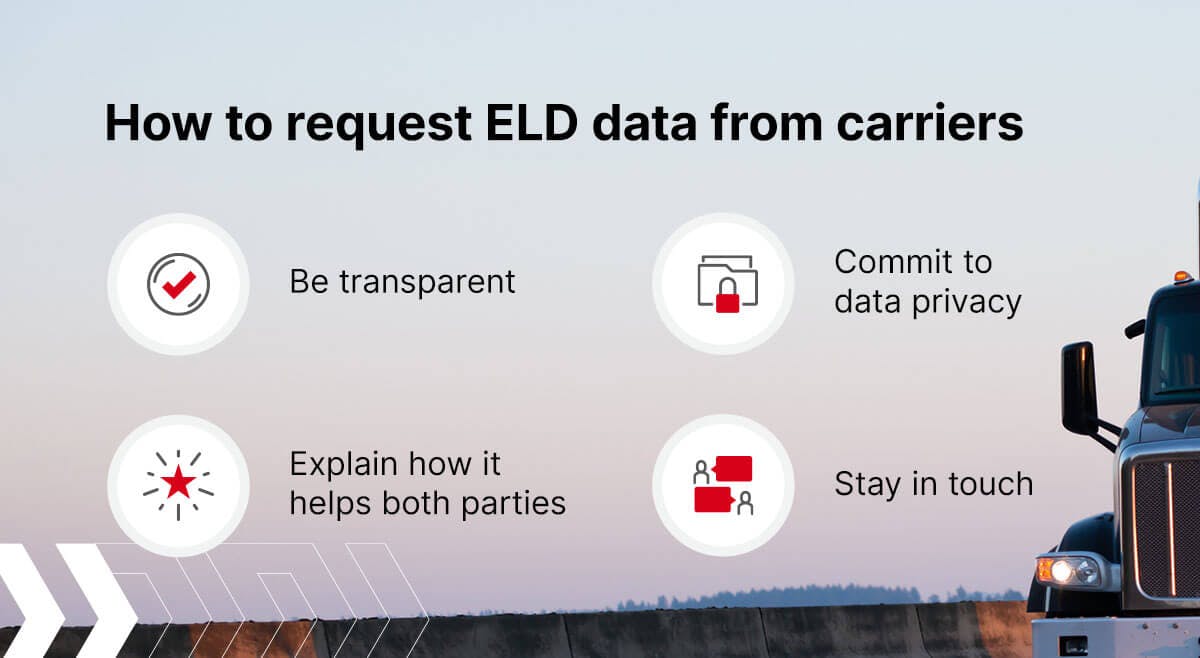
1. Be transparent
The first step in getting ELD data is simple: be clear and honest. Carriers are more likely to share information when they understand exactly how you’ll use it and how it helps everyone’s business. Do you need the data to verify HOS? Are you trying to confirm a pickup time? Do you need to resolve a claim? Be clear and straightforward so the carrier knows their data won’t be misused.
It also helps to explain who will have data access and how long you’ll store it. Carriers want reassurance that you won’t hold on to the data forever. Being transparent shows carriers you respect them and want to build a strong working relationship.
2. Explain how it helps both parties
Sweeten the pot by showing carriers how they can benefit from sharing data. If brokers can use ELD data to reduce detention time and plan lanes more efficiently, everyone benefits. Carriers can reduce vague arrival times and help minimize payment disputes.
For example, brokers might use verified ELD time stamps to prove a driver arrived on time, but was held up at the warehouse. It’s not a problem with the delivery, but with the arrival point. This kind of documentation helps carriers get paid faster and gives shippers clarity about what happened.
3. Commit to data privacy
Carriers are more willing to share when they’re confident their data is being handled safely. Brokers need clear, written processes for collecting, storing, and using ELD data. That includes using encrypted platforms and restricting data access. Share how long the data will be kept so carriers know it won’t live in your system forever. Combine your ELD data with Truckstop’s Registry Monitoring Insurance Services (RMIS) to help support your insurance and compliance needs.
Brokers can use RMIS systems to handle sensitive information and protect carrier data. They can work through their verified portals and automated tracking to stay organized without sacrificing data security.
4. Stay in touch
If you want to keep your partnerships with carriers, you need to stay in communication with them. Trust goes beyond a single ELD data request. Reach out for check-ins or thank-yous to show carriers you value the partnership. If the data shows strong safety performance, let the carrier know. Having your accomplishments and professionalism recognized feels great. Plus, it makes carriers want to work with you again.
What to avoid when asking for ELD data
Even the best intentions can lead to problems. Brokers might accidentally make carriers uneasy when asking for ELD information. Often, the issue isn’t the request itself—it’s how the request comes across. Watch out for these red flags when requesting ELD data from carriers:
- Asking for too much: Carriers notice when brokers request too much data or information that has nothing to do with compliance. Keep your ask focused and direct. They’ll be more likely to provide a little information at a time.
- Using confusing language: Lots of jargon or unclear language comes across as suspicious. Not everyone uses the same systems, acronyms, or compliance terms. Be plain and clear so everyone’s on the same page.
- Not following up: Check in to confirm that the carrier understands what’s being shared and why. Transparency between parties is essential when handling sensitive data.
- Avoiding the carrier: Tell carriers how you used their data and how it helped you. Feedback shows them that you respect their efforts and builds trust.
How technology strengthens broker-carrier trust with ELD data
Data is essential for supporting modern freight partnerships. Digital load boards and RMIS make it easy for brokers and carriers to share information securely and find the best opportunities. Integrated systems take out a lot of the guesswork and make it easier to show your commitment to better service. Brokers can use them to access verified carrier profiles, confirm insurance records, and check safety data all from the same hub.
Technology benefits both sides of the partnership. Carriers can use these tools to see load details and communicate with brokers. Look into automated compliance checks to easily follow regulations, or collaborate through digital document sharing. Having load tracking and essential freight data at your fingertips means you can find the best partners and information for your needs.
Best practices for sharing ELD data
Follow these quick tips to keep your data requesting process smooth and successful:
- Ask for the exact data you need politely.
- Use secure data tools, not text messages or email attachments.
- Keep clear documentation so everyone has access to a paper trail.
- Share how you used the data and how it helped you.
- Communicate regularly with carriers.
Consistency and clear communication go a long way. The more predictable and open your process, the more comfortable carriers will be with future requests. From there, you can build lasting carrier partnerships that help everyone succeed.

Build trust and keep freight moving with Truckstop.com
Strong partnerships start with transparency, and the right tools make sharing and managing data a whole lot easier. With Truckstop RMIS, brokers can onboard carriers quickly, verify compliance, and securely connect ELD information when it’s needed. Everything lives in one organized system, so you can stay focused on the work—not the paperwork.
If you want a smoother way to onboard carriers and keep your compliance process running without friction, RMIS can help.




Get helpful content delivered to your inbox.
Sign up today.
Find high-quality loads fast, get higher rates on every haul, and access tools that make your job easier at every turn.






.png)

.png)

