

Why drivers leave and what actually keeps them (with Charles Gracey)
Tune in to
Behind the Freight
Real-world knowledge that keeps you in the driver's seat and making money.
A driver puts in notice on a Friday. By Monday the recruiter is back on the job boards and the marketing budget is climbing again. The truck still needs a driver. The reason the last one left never got looked at.
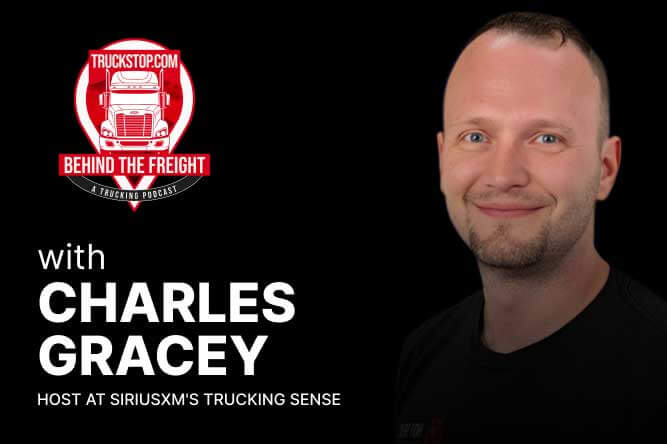
In a recent episode of Behind the Freight, John Howland and Scott Feather sat down with Charles Gracey, a SiriusXM radio host, host of FreightWaves’ Brake Check, and founder of Hot Seat Services. Charles has worked as a driver, in safety, and in recruiting, so he sees the job from the cab and the front office both.
His take on keeping drivers leans on fair pay and honest communication over one-time bonuses. On the episode he walks through why, and what he thinks carriers should do instead.
Access the full conversation on Behind the Freight:
How Charles got started
Charles got into podcasting about five years ago. His first show was Cents Per Mile. The company producing it canceled the show after season one, then FreightWaves picked it up, and he was back on the air.
Before the microphone he drove, worked in safety, and then moved into recruiting. That mix is where Hot Seat Services came from, a company built to help trucking businesses with recruiting, retention, and how they run day to day.
He is the first to admit the start was rough. His earliest time on camera did not go smoothly, and there is a tape from his very first show he still gets comments about.
“People think I came out of the womb doing this, but that’s not the case.”
Where the numbers and the cab disagree
Charles opened with a gap he sees between the headlines and the truck. News outlets keep calling this a golden era of freight because the rates have been consistently increasing. Owner-operators reading their bank statements do not feel it the same way, in his view.
His reasoning is simple. What looks good up front never reaches the driver once fuel and the other bills come out. A load can post a solid rate and still lose money, which is why the number on paper looks better than what it costs to keep a truck running feels in the bank account.
He also called it a data problem. Too many people study the dashboards and stop talking to the operators, which pushes attention toward the graphs and away from the numbers behind the business as the drivers on the ground actually live them.
“Expenses remain extremely high, and while rates are up, volume isn’t quite there.”
Why the sign-on bonus does not hold drivers
Charles is blunt about the sign-on bonus. In his experience, the payout is usually a retention bonus stretched over two years. The cash comes with strings, and drivers know a payout they only earn by staying is not a real perk.
He argued that a one-time payment does little to keep a professional behind the wheel. No one stays for a payout that shows up a year and a half later, and an extra $150 a month is not what makes the decision. What holds a driver, he said, is being paid fairly for the work and being told the truth, because that is what stands up once a driver sees where the margin goes.
Fix the hole in the boat before you spend more
When turnover climbs, Charles said the reflex is to ask for a bigger recruiting budget. He pushes back on that. By his account it can run $7,000 to $15,000 a month per hire just to keep marketing to drivers and cover the churn, and more ad spend does not answer why people are walking out.
The better use of that money, in his view, is finding out why drivers leave and fixing it. His fix is a people-first approach to keeping drivers, one built on pay and respect more than a bigger recruiting budget. He reached for a familiar image to make the point: a boat taking on water.
“Fix the hole in the boat before trying to bail out the water.”
What younger drivers see when they look at the job
Charles turned to how the industry looks to someone deciding on a career. Scan a trucking news site, he said, and the headlines run to violations, seizures, and wrecks. Headlines like that do not pull a young person in.
Part of the problem is structure. Federal age rules push most people leaving high school to wait three years and take other work first, so there is no clear path into a driving career for a new graduate, and many never come back. His fix is to make the job worth wanting with real pay, benefits, and a career people can plan a life around, the same things any driving career has to offer to compete.
“We can’t fake it until we make it; we actually have to make it.”
Where technology helps and where it does not
Charles is for tools that make a driver’s day easier or let a small operator do more. He pointed to Truckstop’s AVA as an example that helps owner-operators compete at a mega-fleet level.
The line he draws is at replacing people. No driver wants to be recruited by an auto-dialer or routed through a machine when there is a problem, he said, and automating that step just sends good candidates looking for the opt-out. Technology, in his framing, should back up the people doing the work.
“Tech should be a tool to empower people, not replace them.”
What keeping drivers really comes down to
For Charles, retention is less about the next incentive and more about paying fairly, communicating honestly, and fixing the reasons drivers leave before spending more to replace them. The bonus check does not solve a problem the operation created. The recruiting budget does not either.
Look hard at why the last few drivers left before approving the next ad buy. Fixing the reason someone quit usually does more for the next hire than the ad that finds them.
Listen to the full episode for Charles’s full take on pay, recruiting, and using technology without losing the human side.




Get helpful content delivered to your inbox.
Run more of your business in one place
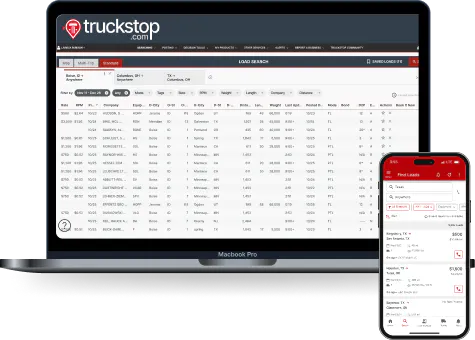
Loads, broker checks, factoring, and fuel without switching apps ten times a day.





.png)

.png)

